
How does a crewed yacht charter work?
By Rene Gaspersic · 7 min read
You tell us roughly when, where and who is coming. We propose a short list of yachts with the full cost of each. You choose one and sign the charter contract with a first payment. The balance and the APA follow about a month before. Then you board, and the captain and crew run the week around you.
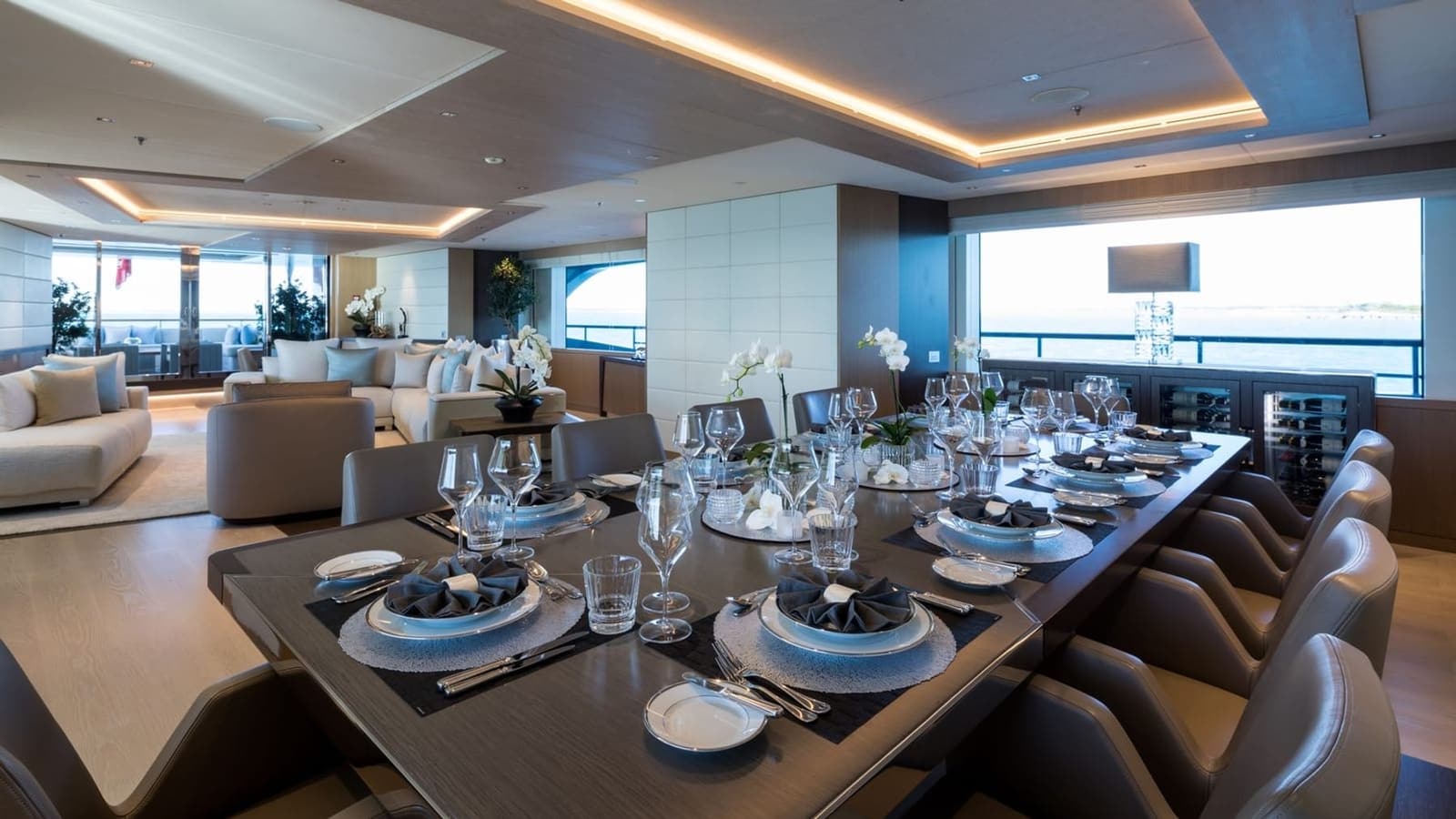
A crewed charter is a week (or more) on a yacht with her own professional crew: a captain, and depending on her size a chef, deckhands and stewards. You do not need a licence or any sailing experience. The crew sail the yacht, cook, look after the cabins and the water toys, and know the bays. You decide how the days go.
People are often surprised by how simple it is once it is set up. Here is a charter from the first message to the last morning on board, the way we run it.
Step 1: Tell us the trip
The first message can be short. What helps us most:
- Roughly when.
A month or a few weeks is enough to start. Dates can stay loose.
- How many of you,
and how many children, with their ages.
- What the week is for:
a family summer, a honeymoon, a birthday or a group of friends. It changes the yacht we propose more than anything else.
- Where,
if you know. "Not sure yet" is a good answer: we suggest places that fit the month and the party. Our guide to where to charter, month by month is a useful start.
- A budget per week,
if you have one in mind. It saves proposing yachts you would not choose.
You can write through the enquiry form, by email, by phone or on WhatsApp. One of our brokers reads it and replies personally.
Step 2: A short list, with the full cost
We come back with a short list of yachts that fit: usually a few, rarely many. For each one we say plainly what she is like, what suits you and what may not, and set out the cost line by line: the charter fee for your dates, the VAT for your route, the APA, any delivery fee and any local taxes. Our guide to what a crewed charter costs explains each line.
How we choose them:
- The cabins and beds
for your party, so nobody shares who should not, and nobody pays for empty cabins.
- The type of yacht.
A motor yacht covers distance quickly and has the most space indoors. A catamaran is stable at anchor, has a shallow draft for bays close to the beach, and a lot of deck space. A sailing yacht is quieter, uses little fuel, and is for people who want to feel the sea.
- The crew.
On a crewed charter the crew shape the week as much as the yacht. We know the yachts and the crews we propose, and we tell you about both.
- The cruising area.
A yacht has a base and the waters she cruises from it. Starting near her base keeps the cost down.
- What is on board:
the tender, the water toys, shade, air conditioning, and anything your party needs, such as a cot or a ramp.
You can ask about any yacht you have seen on this site or elsewhere. We check her for you, and tell you honestly how she compares.
Step 3: Hold the yacht and sign the contract
When you have chosen, we ask the yacht's owner or manager to confirm her for your dates. Only then is anything certain: until a contract is signed, no yacht is held for anyone.
We use the MYBA charter agreement, the standard contract for crewed yacht charters. It is signed by you and the yacht's owner (or the company that manages her), and it sets out:
the yacht, the dates, and the ports where you join and leave her;
the cruising area;
the charter fee, the VAT, the APA and any delivery fee;
the number of guests;
what happens if either side has to cancel, or if bad weather or a breakdown stops the charter.
We go through it with you before you sign. The first payment is half of the charter fee, made when the contract is signed.
Insurance. The yacht carries her own insurance. We suggest you take travel insurance that covers cancellation and curtailment of the charter, as you would for any expensive holiday.
Step 4: Before you go
About a month before the charter, the balance is due: the second half of the fee, with the APA, the VAT, any delivery fee and any other agreed charge.
Around the same time you fill in a preference sheet for the crew. It asks:
what you like to eat and drink, and what you do not;
allergies and diets;
the children's ages and needs;
birthdays or anniversaries during the week;
what kind of week you want: quiet anchorages or busy harbours, long lunches ashore or on board, water sports, walks, diving;
your flights, so the boarding time can be agreed.
The chef shops from it before you arrive, and the captain starts to plan a route. We pass on anything you want the crew to know.
Packing. Soft bags rather than hard suitcases, which are hard to stow on a yacht. Clothes are informal. Most yachts ask guests to go barefoot on deck. The yacht has towels, beach towels and snorkelling gear; ask us about anything else.
Step 5: The week on board
On the first day the captain and crew meet you at the yacht, show you round and go through safety. Then the week is yours.
A typical day: a swim at anchor before breakfast, a short passage in the morning, lunch on board or ashore, an afternoon in a bay with the tender and the toys, and the evening in a harbour town or at anchor under the stars. The captain suggests; you decide.
Two things the captain decides, and you should let him or her:
- The weather.
Wind and sea change the route. On a windy day the captain chooses a sheltered bay or stays in harbour. A good week is planned around the weather, not against it.
- Safety.
The captain is responsible for the yacht and everyone on board, including where she anchors and when the water toys may be used.
The APA pays for the fuel, food, drinks and berths as the week goes on. You can ask the captain for the running total at any time, and if it runs low you top it up.
We stay your contact during the week. If something is not right, tell the captain first, and tell us.
Step 6: The last day
On the last morning the captain gives you the APA account with the receipts. Anything not spent is returned to you. If you want to thank the crew, this is when guests leave a tip: it is never required, and guests commonly give 10–15% of the charter fee in the Mediterranean. It is usually handed to the captain and shared among the crew.
Then you leave the yacht at the agreed port and time. If you would like to come back, the same yacht or another, we keep what we learnt about your party for next time.
How far ahead to plan
There is no fixed rule. For July and August in the Mediterranean, and for Christmas and New Year in the Caribbean, many people start planning in the autumn or winter before. For June, September or the shoulder months, a few months ahead usually leaves a good choice. A late enquiry is always worth sending: we tell you plainly what fits.
Questions about the process
Do we need a licence or sailing experience?
No. On a crewed charter the captain and crew sail the yacht. You need no licence and no experience.
Can we choose the route?
Yes, within the cruising area in the contract and the weather on the day. Tell us and the captain what you would like to see; the captain plans the days around it.
Can we bring children?
Yes. Tell us their ages: it changes which yacht we propose, for the cabins, the safety netting on some yachts and the water toys.
Can we charter for less than a week?
Often, on many yachts, outside the busiest weeks. A shorter charter is usually priced at one-sixth of the weekly rate for each day.
Can we start and end in different places?
Often, yes. A one-way week can add a delivery fee for the yacht's return, which we state before you sign.
What happens if the weather is bad?
The captain changes the route to sheltered water or waits in harbour. The contract says what happens if the yacht cannot sail at all.
Who do we talk to during the week?
The captain, on board, for everything day to day; and us, for anything else.
More questions are answered on our yacht charter questions page. If you are choosing between two of the most popular charter coasts, read Croatia or Greece for a yacht charter.
- The cost lines, VAT and APA: our guide What does a crewed yacht charter cost?, with its official sources.
- The charter process, the contract's contents, the payment sequence, the preference sheet and the crew tip: what the large charter brokers publish in their charter guides and FAQs (read in raw HTML, 27 Oct 2026), and our own practice under the MYBA charter agreement.
Talk to a broker
Tell us roughly when, how many of you there are, and what the week is for: a family summer, a honeymoon, a birthday with friends. Dates and budget can stay loose. We come back with a short list of yachts that fit, say plainly what each one is like, and stay your contact from the first email to the last day on board.


Rene Gaspersic
charter broker
Email info@soretoyachting.com · Phone +44 7342 933198 · WhatsApp +44 7342 933198
Keep reading



Ask for the full cost
of your week.
Two short steps. Dates and budget can stay loose. We reply personally, by email, phone or WhatsApp.